On Craft
Craft is an uncomfortable word. It implies standards. It demands that you look at your own work honestly, without the comfortable blur of intention.
Here is something I learned the hard way: you don’t truly see your work until you live with it. Not glance at it. Not demo it. Live with it.
A screen is forgiving. It glows. It flatters. It lets you scroll past the flaws. But when something exists in the physical world, when it sits in your home or runs in your daily life, it becomes unavoidable. Every weakness you convinced yourself wasn’t there starts to surface.
I stumbled onto this truth through photography, a craft I’ve practiced for years. Printing my own work changed everything. Not incrementally. Fundamentally. A photograph on a screen looks finished. The same image printed at 40x32 inches and hung on your wall? It just sits there, unblinking, revealing what you actually captured versus what you thought you captured.
The same phenomenon happens when you ship a product. The first version of code has a quiet grace period. You can walk away, let thoughts marinate, then return to make it better. But once it’s in someone’s hands, once they’re using it daily, the truth becomes unavoidable. You see what you actually built, not what you imagined you built.
Tyler Shields, a photographer whose work I admire, once offered advice that stuck with me: if someone paid you a million dollars for your photograph, is there anything you would change? If yes, go back and fix it. Rodney Lough Jr. put it differently: would you spend $500 of your own money to make this image?
I apply the same filter to products. Would I use this myself every day? Would I pay for this? These questions are lacerating. They cut through the comfortable narratives we tell ourselves about our work.
Frankly, only a handful of my photographs survive this filter. The rest I wanted to scrap after a couple of weeks. The same is true for features I’ve shipped. This reckoning never occurs when you only view your work on a screen, when you only demo your product in controlled conditions.
There is a big difference between making something and taking something.
Taking a photograph is like throwing dice. Sometimes you get lucky. More often you don’t. The results feel lifeless, like postcards. You can develop a personal style, even build a following, and still produce the same styled postcards. It’s deceiving. Easy to get lost in.
Making a photograph is a process of learning, self-reflection, and refinement. Sometimes over years. But in the end, your soul reflects in that image. People feel it. They relate to it on a deeper level.
The same applies to products. You can ship features to hit metrics, to satisfy a roadmap, to look busy. That’s taking. Or you can build something you’re genuinely proud of, something that carries your conviction. That’s making. It is exponentially more meaningful to make one great thing in five years than to take hundreds of shortcuts each year.
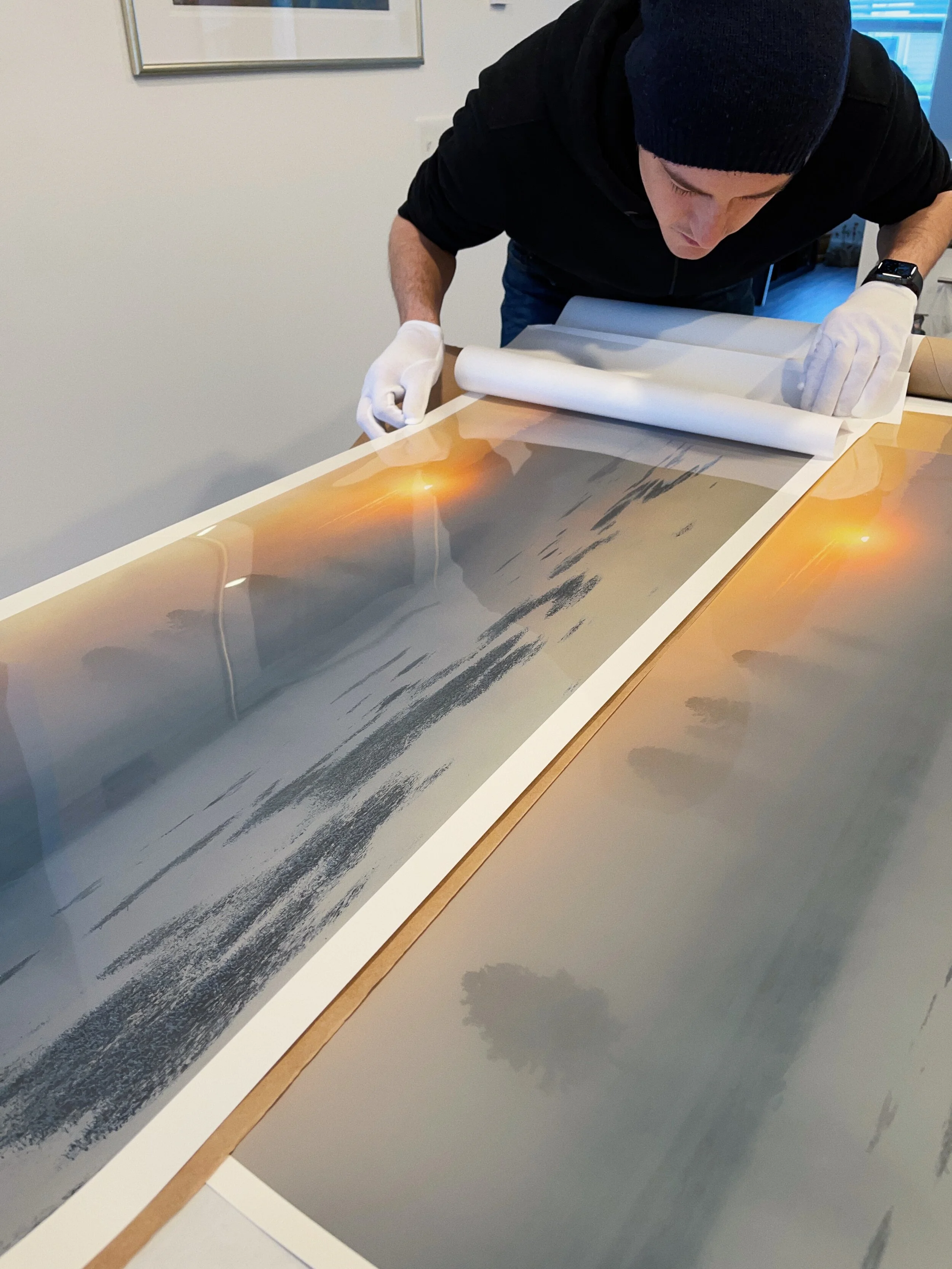
Inspecting photographs made in a darkroom on a LightJet machine and Fuji Flex material.
In photography, there’s a distinction between a photograph and a print. A photograph is made in a darkroom using exposure, chemistry, and light-sensitive paper. The image is embedded into the fabric of the material. A print is painted onto the surface, like an inkjet. Nothing wrong with prints. They look great. But they are not photographs.
This might sound like pedantry, but it matters. The process shapes the outcome. The constraints define the craft. When everything becomes infinitely reproducible, when there’s no friction, something essential evaporates.
Finding a great printmaker who is also a perfectionist is rare. Almost like finding a life partner. But to find one, you must first understand the process yourself, down to the finest details. There is no place for arrogance here. Only curiosity.
The same is true for building products. You cannot delegate craft. You can hire talented people, but you must understand the work deeply enough to recognize excellence when you see it. And more importantly, to recognize when something is merely adequate.
That’s the test. Can you live with it? Not for a day. Not for a launch. But for years.
If yes, others will too.